Sharpen Your 3rd Grader’s Mind with 2026’s Best Printable Math Logic Puzzles
Boost your 3rd grader's critical thinking with 2026's best printable math logic puzzles. Fun, challenging worksheets for home or classroom success!
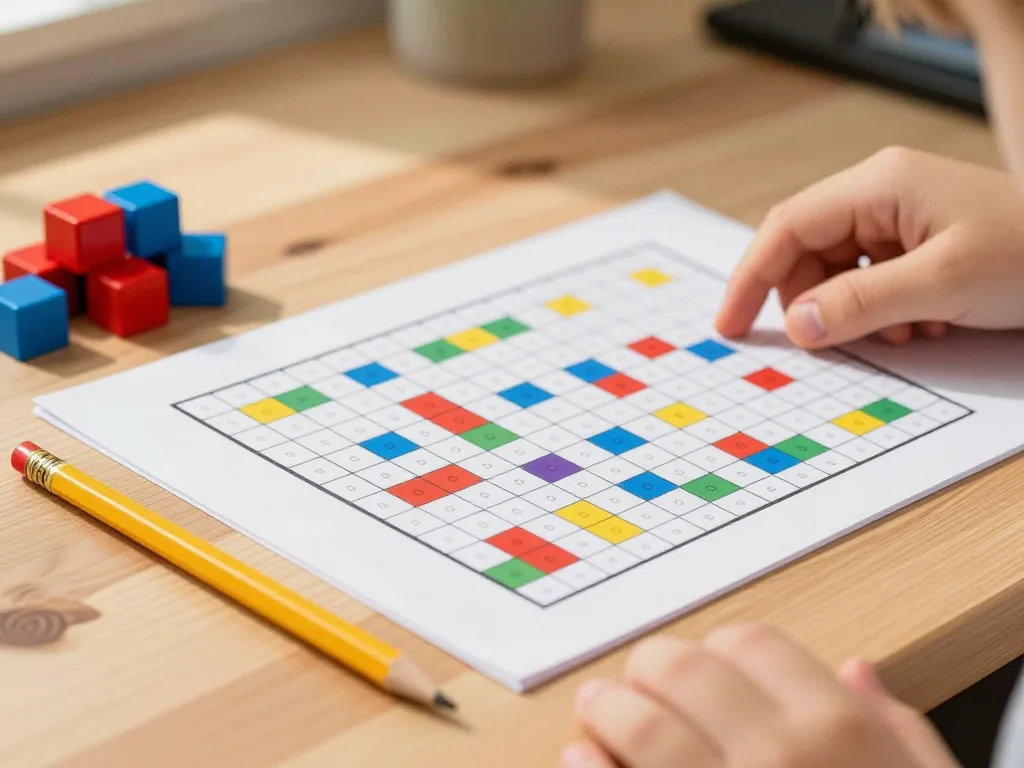
Third grade is the perfect time to turn “I’m bored” into “I’ve got it!”—and nothing sparks that lightbulb moment faster than a clever puzzle that hides math inside a game. Screens are always competing for your child’s attention, so finding a low-tech, high-brainpower activity can feel like a treasure hunt. That’s why we’ve rounded up 2026’s best printable math logic puzzles for 3rd grade. These challenges sharpen critical thinking, boost problem-solving confidence, and make numbers feel like play. Whether it’s a sneaky number maze or a grid-based riddle, you’ll get instant, ready-to-print activities that turn waiting rooms, car rides, and rainy afternoons into mini brain workouts.
Why Math Logic Puzzles Matter for 3rd Graders in 2026
The Shift from Rote Memorization to Reasoning
By 2026, classrooms have largely abandoned “drill and kill.” Educators now champion productive struggle. Third graders aren’t expected to recite times tables or repeat algorithms like tiny calculators. Instead, the focus is building neural pathways for reasoning—flexible, creative problem-solving that predicts success in algebra and beyond. Printable math logic puzzles fit this shift perfectly because they force a child to ask why before how. Take “The Missing Factor Grid.” It doesn’t just test multiplication facts; a student deduces which number fills a blank by analyzing relationships across rows and columns. That process—trial, error, pattern-recognition, revision—builds executive function and working memory. In an era where AI computes instantly, judgment beats arithmetic speed. Logic puzzles train that edge daily.
“In 2026, the National Council of Teachers of Mathematics emphasizes that non-routine problems build the flexible thinking needed for algebra and beyond.”
This isn’t a gentle suggestion; it’s a curricular mandate. Non-routine problems—those without a single obvious formula—now appear in benchmark assessments. A child who only memorizes will freeze. A child who puzzles will adapt.
How Puzzles Support Common Core Grade 3 Standards
You don’t have to sacrifice rigor for fun. The best printable logic puzzles for 3rd grade align tightly with the Common Core standards your child is already tested on. Consider “The Zoo Pen Problem.” It asks a student to divide 24 animals into pens of 3, 4, or 6—reinforcing multiplication and division within 100 (standard 3.OA.C.7) without a single flashcard. Another classic, “The Magic Triangle,” has kids arrange numbers 1–6 so each side sums to the same total. Experimenting, they implicitly use properties of operations—commutative, associative, distributive—not because a worksheet says so, but because rearranging numbers is the only path to a solution. Even place value up to 1,000 gets a workout. Puzzles requiring adding or subtracting 10 or 100 to navigate a number maze make regrouping and borrowing feel like a game, not a chore. The genius lies in the disguise. Your third grader thinks they’re breaking codes or outsmarting a robot, but their brain rehearses the exact reasoning patterns state tests and future math classes demand. Print them Monday; by Friday, you’ll see a child who doesn’t just answer—they explain. That’s the real win for 2026.
What to Look for in a 3rd Grade Printable Logic Puzzle
Not every puzzle labeled “3rd grade” earns that badge. The best printable logic puzzles for this age group walk a careful line—challenging enough to spark real thinking, but not so dense that a child feels defeated before the first clue. Here’s exactly what to scan for before you hit print.
Age-Appropriate Complexity and Time Limits
A solid 3rd-grade logic puzzle should be a snack, not a feast. Aim for something your child can finish in 10 to 15 minutes of focused work. If it drags past 20, the working memory load is likely too high, and frustration will replace curiosity. The reading load matters just as much. Clues should be short, direct sentences (“Maya does not sit next to Ben”) rather than paragraphs of story setup. And here’s a hard rule: no multiplication facts beyond 12×12. Even that is pushing it—many 3rd graders are still mastering 6s and 7s. If a puzzle requires 13×4 or uses division, it’s quietly a 4th-grade worksheet. You want the math to be a tool, not a hurdle. The logic itself—deducing, eliminating, cross-referencing—should be the main event.
Visual Clarity and Answer Key Availability
The physical layout of a printable puzzle can make or break the experience. Look for these three non-negotiables:
- Large, clear fonts and simple grid layouts – A 10-point font with cramped boxes is a recipe for careless errors. The best puzzles use 14-point or larger type, with plenty of white space between rows and columns. Grids should be 3×3 or 4×4 at most—anything bigger overwhelms a 3rd grader’s visual tracking.
- Answer key on a separate page – This is standard practice in quality puzzle sets. The key should never sit on the same page as the puzzle, or a wandering eye will spoil the solve. Ideally, the answer key also shows the completed grid, not just the final answer, so you can help your child see where they went wrong.
- No more than 2–3 steps of logic per puzzle for beginners – A beginner puzzle might say, “The red car is parked next to the blue car” and “The blue car is not first.” That’s one or two deductions. As your child builds confidence, you can move to puzzles with four or five linked clues, but start simple. The goal is a satisfying “aha!”—not a silent, confused stare at the paper.
In 2026, the best printable puzzle sets also include a small “hint” section on the last page, offering a nudge without giving away the whole solution. That’s a bonus worth paying for—most quality bundles run from €4 to €12 per set of 20–30 puzzles, a small price for hours of screen-free mental stretching.
The Five Best Puzzle Formats for Ages 8–9
Third graders thrive on puzzles that balance challenge with genuine success. At this age, kids move from concrete arithmetic to abstract reasoning. The right format builds critical thinking quietly—without feeling like homework. Drawing on educational trends and what truly engages 8- and 9-year-olds in 2026, these five printable formats are the most effective to keep on hand.
Sudoku and Number Grids
A 4×4 or 6×6 Sudoku grid offers a perfect entry point. Unlike the 9×9 adult version, these smaller grids need no arithmetic—only deduction and pattern recognition. Your child scans rows, columns, and boxes to eliminate possibilities, directly strengthening logical sequencing and working memory. For variety, try “picture Sudoku” with animal or emoji symbols instead of numbers; it reinforces the same logic while feeling like a game. Number crosswords are another option, where clues are simple sums and answers fit into a crossword-style grid. These build number sense without the pressure of timed tests.
KenKen and Arithmetic-Based Puzzles
KenKen, often called “the puzzle that makes you smarter,” works well when scaled for third graders. Choose versions that rely only on addition and subtraction within 100, with an occasional multiplication fact from 0–5 as a gentle stretch. Each “cage”—a bold-outlined box—shows a target number and an operation. The child fills the grid so no number repeats in any row or column. This format blends arithmetic fluency with logical elimination. Printable 4×4 KenKen sets with answer keys are widely available, and you can adjust difficulty by changing cage sizes. For a non-commercial route, create your own using blank templates, tailoring the math to your child’s current skill level.
Logic Grid Puzzles and Mystery Numbers
- “Who owns which pet?” style grids with 3–4 categories—such as children, pets, and favorite ice cream flavors—are a powerhouse for teaching multi-step reasoning. These grids require reading clues like “Maya does not own a cat” and cross-referencing across categories. With just three to four categories, they stay solvable but demand careful attention. Look for printable versions with visual icons—pictures of pets, kids, and treats—so the puzzle feels more like a story than a spreadsheet.
- “Mystery number” riddles combine place value and basic operations. For example: “I am a two-digit number. My tens digit is 4 more than my ones digit. The sum of my digits is 10. What am I?” These puzzles force children to translate language into math, test hypotheses, and use trial-and-error systematically—all essential for later algebra. Print a sheet of five such riddles and let your child work through them with a pencil and scratch paper; the satisfaction of cracking the code is its own reward.
Where to Find Free, Legally Shareable Printables in 2026
Finding high-quality, cost-free math logic puzzles in 2026 doesn’t require a deep dive into the dark web. It just means knowing which well-maintained corners of the internet respect both your wallet and copyright law. For third graders, the sweet spot is puzzles that challenge without frustrating. These hubs consistently deliver teacher-vetted, printable logic grids, Sudoku-style number challenges, and pattern-based reasoning sheets.
Trusted Educational Websites
Start with the big four. Education.com remains a powerhouse, with a robust “logic and reasoning” filter under its third-grade math section. Much of its premium content is subscription-based, but its free weekly “puzzle drop” includes 3–5 printable logic mazes and “which comes next?” sequence sheets—perfect for a quick morning warm-up. Math Salamanders is no-nonsense, ad-heavy, and reliable, offering dozens of downloadable PDFs specifically for 3rd grade, including “Logic Problems with Addition” and “Magic Square” variants. K5 Learning excels at clean, distraction-free worksheets; its free tier includes a monthly rotation of “Think & Solve” puzzles that blend arithmetic with deduction. Teachers Pay Teachers (TpT) has a surprisingly deep free section—search “3rd grade logic puzzle free,” then filter by “Free” and “PDF.” Many sellers offer a 3–5 page sample from their larger paid packs, ideal for testing whether a puzzle style clicks with your child.
How to Verify a Resource Is Truly Free
A “free” label can mislead. Before clicking “download,” scroll to the footer or the resource’s “Terms of Use” page. Many sites—especially TpT—allow personal or single-classroom use but explicitly prohibit sharing the file on your blog, school server, or group chat. If you plan to print copies for a co-op or tutoring group, look for “multi-user license” or “school-wide license” in the description. When in doubt, email the creator; most are happy to clarify. Also, beware of sites that ask for your email but then redirect to a “premium” checkout screen—that’s a lead magnet, not a free resource.
“Always check the site’s terms of use—many free printables are for personal or single-classroom use only, not for redistribution.”
Avoiding Paywalls and Outdated Materials
The internet is littered with “free” puzzle PDFs from 2019 that reference outdated standards or include typos. In 2026, stick to sites updated within the last 12 months. Look for markers in the title or description: “2026 edition,” “aligned to CCSS” (Common Core State Standards), or “new for the spring semester.” If a page’s copyright line reads 2023 or earlier, skip it—math logic pedagogy hasn’t changed dramatically, but vocabulary and visual design have. Avoid any site that makes you fill out a survey or watch a video before unlocking the PDF; legitimate free resources rarely require that. For a guaranteed legally shareable option, print from a PDF that explicitly states “Creative Commons Attribution-NonCommercial 4.0” in the footer. These you can freely share with other parents or teachers, as long as you credit the creator and don’t sell the prints.
How to Introduce Logic Puzzles to a Reluctant 3rd Grader
If your 8-year-old groans at the sight of a worksheet, don’t push harder. Shrink the challenge and change the vibe. Start with the absolute easiest puzzle you can find—ideally a 4×4 Sudoku or a three-row logic grid with only four clues. Sit beside your child, not across, and model your thinking aloud. Say, “This row already has a 2 and a 4, so the missing squares can only be 1 or 3. And this column has a 3, so this square must be 1.” Point to each eliminated possibility, crossing out numbers with a pencil. Let your child see that guessing isn’t the goal—deduction is. Once you solve that first mini-grid together, hand them a fresh, identical puzzle and ask, “Want to be the teacher and show me how you’d do it?” That low-stakes role reversal often unlocks a stubborn mind.
Next, reframe the activity as a game, not a test. For a reluctant third grader, the fear of being “wrong” is the biggest barrier. Grab a simple kitchen timer and say, “Let’s see if we can beat the clock—I’ll race you, but you get a 30-second head start.” The timer turns pressure into playful adrenaline. Skip candy for rewards; offer small, non-food incentives that feel like privileges—an extra ten minutes of story time before bed, choosing the family playlist during dinner, or picking the weekend movie. For the first seven days, work on every puzzle together as a team. You hold the pencil, they call out the moves, or you each take one row and swap. This removes the “I have to do this alone” dread and builds a shared vocabulary of strategies like “cross-out” and “only-option.” After a week of joint solving, most kids will start grabbing the pencil themselves. If they stall, pause and ask, “Which clue looks easiest to you?” rather than pointing out their error. Keep sessions to ten minutes max—short, sweet, and always ending on a success, even if that means you quietly nudge the final move. By making logic feel like a collaborative puzzle box instead of a graded assignment, you’ll transform resistance into curiosity by spring.
Integrating Puzzles into Homework and Classroom Routines
The true power of printable math logic puzzles emerges not in a single sitting, but in their rhythmic, repeated use across your week. Because they require no screens, no logins, and no prep beyond a quick print, they slide effortlessly into the nooks of a busy school day. Here’s how to make them a living part of your third grader’s routine rather than a sporadic worksheet.
Morning Warm-Ups and Transition Activities
A single puzzle can serve as a 10-minute bell-ringer or after-lunch reset, requiring zero prep. Keep a stack of laminated copies in a tray by the door. As students enter, they grab one and start immediately—no directions needed. The key is to choose puzzles with a clear “entry point” (like a Sudoku-style grid or a balance scale equation) so that even a sleepy child can begin. For transitions, project a puzzle on the board while you take attendance or pass back papers. The quiet focus resets the room’s energy, and you’ll find that the last five minutes before dismissal are far calmer when a puzzle is the closing task.
Weekly Puzzle Stations and Family Homework Nights
Don’t relegate puzzles to individual work. Set up a “Puzzle Station” as one of your weekly math rotations. Place three different printable puzzles in sheet protectors with dry-erase markers; students rotate every 15 minutes. This builds collaborative reasoning as pairs debate which clue to use first. For homework, pair a puzzle with a brief family note explaining one strategy (e.g., “try working backward”). Teachers report that sending one printable puzzle home per week increases parent engagement and builds a shared math vocabulary—parents start saying “logical elimination” at the dinner table. For a monthly event, host a “Puzzle Night” where families rotate through four stations; you’ll need roughly 30–40 printed copies per class, which costs about €2 to €5 per month in paper and ink for a typical classroom.
Tracking Progress Without Grades
Resist the urge to grade these puzzles. Instead, keep a simple “puzzle passport”—a folded card with 20 blank boxes. Each time a child completes a puzzle (correctly or after self-correction), they stamp a box with a star or sticker. Once full, they earn a “Chief Logic Officer” badge or a pick-from-the-prize-bin reward. This system builds confidence without pressure because the goal is persistence, not perfection. Children learn to self-check by comparing answers with a partner or a posted answer key, and they feel a tangible sense of journey. The passport also gives you a quiet diagnostic: if a child avoids the logic grid puzzles but devours the number mazes, you know exactly where to nudge their challenge zone next week.
Advanced Variations for Fast Finishers and High Achievers
Once your third grader has mastered the core puzzle formats, it’s time to stretch those neural pathways with layered challenges that reward persistence and creative thinking. These variations build genuine mathematical stamina, not just fill extra time.
Multi-Step Mystery Puzzles
Combine two favorite formats into one brain-bending quest. Start with a small KenKen puzzle—a 4×4 grid works best—where the solution to each row or column reveals a single digit. That digit becomes a “clue.” For example, the sum of the KenKen’s top row might equal the number of houses on a street in a logic grid. Next, hand your child a logic grid with four suspects, four locations, and four times. Using the KenKen-derived numbers as fixed facts (e.g., “The clue says the thief was at the library at 3:00”), they must deduce the full solution. The trick? The KenKen puzzle requires arithmetic—addition, subtraction, and simple multiplication—while the logic grid demands pure deductive reasoning. This two-step process forces the child to switch cognitive gears, a skill that pays off in standardized testing and real-world problem solving. For a printable version, create a single sheet with the KenKen on the left and the logic grid on the right, leaving a blank line for the “decoded clue.” You can easily generate these on free puzzle websites, then print them for classroom or home use.
Creating Your Own Puzzles
The highest level of mastery is creation. Encourage your fast finisher to become a puzzle designer with these three concrete activities:
- Start with a 4×4 Sudoku and remove two numbers. Print a completed 4×4 Sudoku grid, then white-out two cells. Ask the child to solve it, but then challenge them to recreate the original grid by writing a new puzzle with those same two missing numbers. This reverse-engineering teaches unique solutions and constraint satisfaction.
- Write a “mystery number” using place value clues. Have the child invent a three-digit number, then write three or four clues like “My hundreds digit is 2 more than my tens digit” or “The sum of all my digits is 11.” They then trade clues with a partner who must find the number. This reinforces place value, comparison, and algebraic thinking.
- Swap puzzles with a classmate for peer challenge. After creating their own puzzle, have students exchange papers. Each child solves the other’s creation, then provides written feedback on clarity and difficulty. This builds community and gives the creator immediate insight into how logical their clues truly are.
These advanced variations turn passive puzzle-solving into an active, creative pursuit—perfect for the curious 8-year-old who always finishes first. For a full set of printable templates, expect to pay anywhere from $5 to $15 per downloadable packet from reputable educational sites in 2026, or find free versions on teacher resource forums.
Troubleshooting Common Pitfalls and FAQs
What If the Puzzle Requires Skills My Child Hasn’t Learned Yet?
Don’t force it. The printable puzzle market in 2026 is full of free, high-quality options, so there’s no reason to wrestle with a sheet that assumes knowledge of fractions or multi-digit division when your third grader is still mastering multiplication facts. Skip it. Look for puzzles labeled “Grade 3” or “ages 8–9” on trusted sites like Teachers Pay Teachers, Education.com, or free archives from math education nonprofits. Those labels align with Common Core or similar standards, so the puzzle will only use operations your child has seen in class. If the instructions mention “borrowing across zeros” or “area models” and your child hasn’t touched those, set the sheet aside. Hundreds of alternatives reinforce what they’re learning now—from addition-with-regrouping logic grids to simple multiplication sudoku. Save the advanced stuff for next year.
How Do I Keep Puzzles from Becoming a Source of Frustration?
Frustration kills logical thinking. When a child’s brain hits stress mode, it shuts down the prefrontal cortex—the area responsible for deduction and pattern recognition. To keep puzzles fun, try three tactics. First, prepare a “hint card” before handing over the puzzle. Write one solved row or one clue in plain language, like “The top row sums to 12, so the missing number is 4.” When your child is stuck, give them the card, not the answer. That preserves discovery while ending dead-end paralysis. Second, set a hard 15-minute limit per puzzle. When the timer goes off, stop—even if it’s unfinished. This teaches time-boxing and prevents stewing in failure. Return tomorrow with fresh eyes, or switch puzzle types. Third, pick puzzles with self-checking features, like “every row and column sums to 45” or “the shaded box must be 7.” That lets your child verify their own work, reducing anxiety and building independence.
Are Digital Versions Better Than Printable?
No—not for this age group. Printables cut screen time, a real concern for many parents in 2026. More importantly, pencil-and-paper trial and error is neurologically better for developing spatial reasoning in 8–9-year-olds. When a child writes a number, erases it, and writes another, they engage fine motor skills and visual-spatial working memory in ways a touchscreen can’t replicate. Printables also let them annotate—drawing arrows, circling clues, crossing out options—a key metacognitive strategy. Digital puzzles often auto-correct or animate, which robs kids of the messy, iterative process that builds logical thinking. So stick with paper. For a digital backup, print two copies and keep one in a plastic sleeve with a dry-erase marker—best of both worlds.
Conclusion
Math logic puzzles for 3rd grade printable are far more than busywork. They offer a screen-free way to build critical thinking, patience, and problem-solving skills that last well beyond the classroom. By weaving numbers together with patterns, clues, and deductive reasoning, these puzzles turn routine math practice into a game your 8-year-old will genuinely look forward to. The next step is easy: choose a few puzzles that fit your child’s current comfort level, carve out 10–15 minutes a couple of times a week, and let them solve at their own speed. Start with a single puzzle today. With every clue they crack, their confidence—and their logic muscles—grow stronger.