7 Brain-Building Math Logic Puzzles Your 2nd Grader Will Actually Love (2026 Guide)
Make 2nd grade math fun in 2026! 7 brain-building logic puzzles kids love, boosting critical thinking & problem-solving skills. Perfect for home or class.
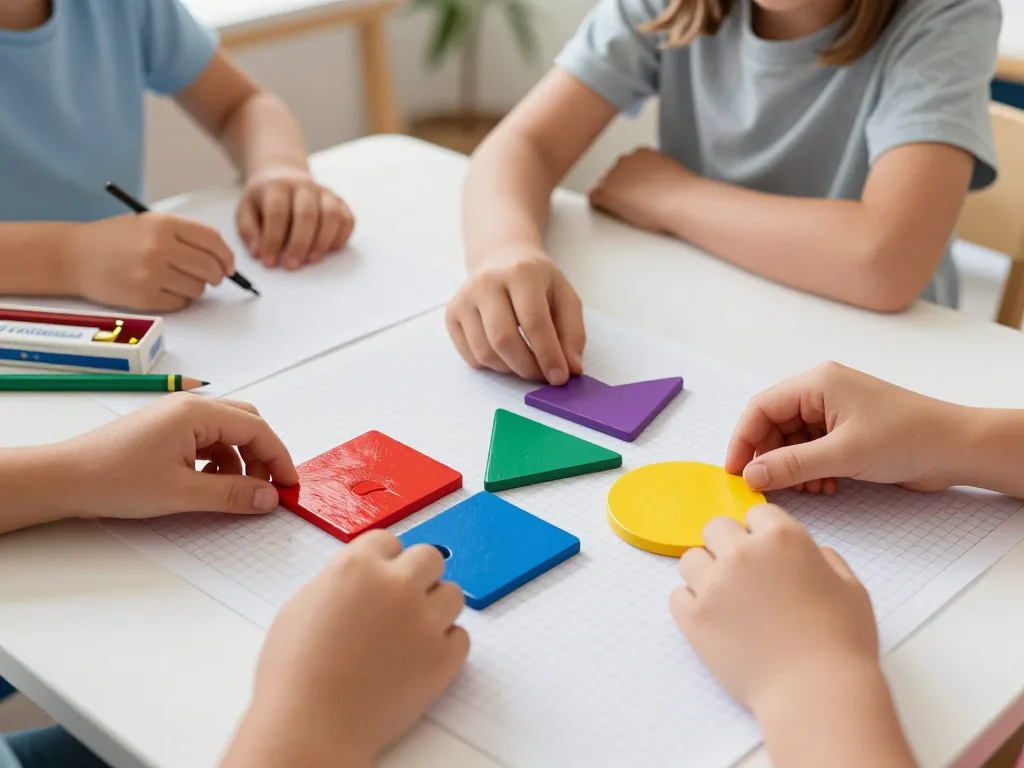
Forget the groans and glazed-over eyes—math time is about to become the highlight of your second grader’s day. This 2026 guide is your secret weapon. It’s packed with seven brain-building logic puzzles, each designed to turn abstract numbers into thrilling, hands-on challenges. No boring worksheets here. Instead, every activity sparks genuine curiosity, sharpens critical thinking, and builds a rock-solid foundation for future math success. By the end, you’ll have a fresh toolkit of playful, screen-free ideas your child will beg to solve again and again.
Why Math Logic Puzzles Matter for Second Graders in 2026
The Connection to Common Core and NCTM Recommendations
The math landscape for second graders in 2026 looks far more intentional than it did a decade ago. Most classrooms still anchor to the Common Core State Standards, with three core domains leading instruction: addition and subtraction within 100, place value up to the hundreds, and multiplication as repeated addition. But here’s the shift—the National Council of Teachers of Mathematics (NCTM) has increasingly pushed back against rote worksheets. Their position is clear: problem-solving and logical reasoning shouldn’t be a Friday “enrichment” afterthought; they must weave into daily math instruction. Logic puzzles accomplish this beautifully because they force a child to use the arithmetic they’ve learned, not just recite it. Consider a puzzle that asks, “I’m thinking of a number between 40 and 50. The digits add up to 9. What is it?” That single question demands place value understanding (tens and ones) and addition fluency at once. Crucially, these puzzles build persistence and flexible thinking—a child who tries 42, fails, then tries 45 is learning to adjust strategy, not just compute. And since the math involved is simple, with no advanced computation, the cognitive load shifts to reasoning—exactly where 2026’s standards want it.
What Second Graders Are Developmentally Ready For
Don’t overestimate what a seven-year-old brain can hold, but don’t underestimate it either. In 2026, developmental research shows that second graders handle simple deductive reasoning quite well. They can play “guess my number” with clues about even/odd, greater/less, and digit sums—provided you keep numbers within 100 and stick to whole numbers. They thrive on visual patterns, like color sequences, shape grids, and number lines, and on puzzles that use concrete objects such as counters or connecting cubes. They also need a clear “win” condition—a single, satisfying answer that clicks into place. What they are not ready for: negative numbers, fractions, or any multi-step algebraic reasoning. Keep every puzzle strictly within whole-number arithmetic and simple operations. A 2026-appropriate puzzle might be: “I have three coins. Their total is 25 cents. One coin is a nickel. What are the other two?” That’s solvable with trial and error, uses real money concepts, and delivers that “aha” moment. Avoid anything with variables, exponents, or abstract notation—save that for third grade. The sweet spot is a puzzle that feels like a game but secretly trains the exact logic skills that will make fractions and algebra click two years from now.
The Five Core Puzzle Types That Work Best at This Age
Second graders are in a sweet spot for puzzle-based learning. They can hold multiple steps in their heads, yet they still crave the satisfaction of a clear, concrete finish line. The trick is choosing puzzles that feel like games, not worksheets, while quietly building number sense and logical reasoning. These five types consistently hit the mark in 2026 classrooms and living rooms.
Number Mazes and Path Puzzles
Start with a 5x5 grid (or smaller) filled with whole numbers. Give a simple rule: move from start to finish by adding 2, subtracting 1, or hopping to the next even number. Keep all sums and differences under 100 so the math stays automatic, not laborious. These work brilliantly as 5–10 minute warm-ups or fast finisher activities—just print a few variations and let kids self-check by tracing their path. The visual movement makes abstract operations feel physical and immediate.
Magic Squares with Sums Up to 20
A 3x3 grid where every row, column, and diagonal adds to the same target (15 or 18 works well) is a classic for a reason. At this age, scaffolding is key: pre-fill 5–7 cells, leaving only 2–4 blanks for students to deduce. All entries must be whole numbers between 1 and 9—no fractions, no negatives, no surprises. This forces kids to think about missing addends and how positions relate, not just rote addition.
Pattern Recognition Sequences
Use both visual patterns (alternating shapes, colors, or sizes) and numeric sequences like 2, 4, 6, 8 or 5, 10, 15. Ask students to state the rule aloud, then predict the next 2–3 terms. This is the perfect bridge to multiplication—when they see 5, 10, 15 as “skip-counting by fives,” they’re already doing repeated addition. Keep patterns to one clear operation (add 3, double, or +2 then +4) to avoid confusion.
Simple Grid-Based Logic Puzzles (2x2 or 3x3)
Swap letters and numbers for pictures or emojis to cut down on reading load. Give 3–4 concrete clues like “The cat is not in the top row” or “The star is next to the circle.” Keep the grid tiny and the categories tangible—animals, fruits, or toys, never abstract concepts like time or distance. This builds deductive reasoning without frustrating vocabulary barriers.
Guess My Number with Clues
Pick a number between 1 and 100, then reveal clues one at a time: “It is even,” “It is greater than 30,” “The sum of its digits is 7.” Have students cross out numbers on a hundreds chart or move a token along a number line. This builds place value understanding (tens and ones) and deductive logic simultaneously—and it’s endlessly repeatable with different numbers and clue combinations.
How to Introduce a Logic Puzzle to a Second Grader
The first session matters more than any worksheet you’ll ever print. A seven-year-old’s brain is wired for play, not for “solving problems correctly.” Make the puzzle feel like a treasure hunt, not a test. Start with one single puzzle type—maybe a simple grid logic puzzle with only two categories, like “Which pet belongs to which child?” Don’t hand them a mixed set of five different puzzles. That’s cognitive overload, and it will trigger frustration within minutes.
Sit beside them, not across a table. Read the puzzle aloud, slowly, pointing to key words with your finger. Then ask the two magic questions: “What do we know for sure?” and “What can we figure out from that?” These two questions are the entire engine of logical thinking. For the first two or three puzzles, model your own thinking out loud. Say things like, “I know that Maya does not have a cat, so I’m going to cross out that box. Now I see that Ben must have the cat because only one pet is left.” Your voice becomes their inner voice later.
Use physical objects before anything on paper or a screen. Grab counters, colored blocks, or printed picture cards of animals and kids. Let them physically move the “dog” card next to the “Liam” card. This tactile step builds the mental model of “if-then” relationships far better than a pencil mark. Once they’ve solved two puzzles with objects, then—and only then—move to a printed grid.
Common Mistakes to Avoid
The biggest error is rushing. When your child pauses, don’t jump in with the answer. Let them sit with the struggle for three to five full minutes. That discomfort is where the neural connections form. If they’re truly stuck, don’t give a hint that solves the puzzle. Instead, ask a redirecting question: “What if you tried the opposite?” or “Which clue have we not used yet?” This keeps their agency intact.
Also, avoid puzzles with reading-heavy instructions. At this age, a puzzle with a paragraph of text is a reading test, not a logic test. Choose puzzles with short sentences, icons, or picture-based clues. If a puzzle requires more than two sentences of setup, read it for them and then remove the text. The goal is pure reasoning, not decoding.
Finally, never turn the puzzle into a race or a grade. Say, “I love how you tried that even though it didn’t work,” not “You got it right!” The joy must come from the thinking itself, not the correct answer. If you do this right, your second grader will beg for “one more puzzle” at bedtime—and that’s the real win.
Using Logic Puzzles in the Classroom (2026 Best Practices)
Warm-Ups and Fast Finishers
In 2026, the most effective classrooms use logic puzzles as a daily mental stretch, not a Friday treat. Set a visible 5–10 minute timer for each puzzle—enough urgency to focus, not enough to stress. When time’s up, you’re not after mastery; you want engagement and a quick share-out of strategies. Rotate puzzle types deliberately across the week: Monday for number bonds and addition squares, Tuesday for visual-spatial tangram logic, Wednesday for place-value riddles, Thursday for pattern sequences, and Friday for a mixed “challenge” puzzle. That rotation touches multiple math domains—operations, algebraic thinking, base-ten understanding—without drilling any one skill into boredom. Keep a “puzzle of the day” projected or printed in a corner of your whiteboard. When a student finishes independent work early, they grab a dry-erase marker and give it a go. Dead time becomes productive thinking, and once the weekly rotation is set, your prep is minimal.
Formative Assessment and Non-Routine Problem Solving
Here’s a 2026 reality: many state-aligned formative assessments now include non-routine tasks that look almost exactly like the logic puzzles you’re already using. These aren’t simple “find the answer” questions—they ask students to deduce, eliminate, or justify. Embedding logic puzzles into your weekly routine quietly builds the exact cognitive muscles those assessments measure. Use a missing-number puzzle in a 3x3 grid to check place-value understanding; use a “which number doesn’t belong” prompt to assess addition and subtraction fluency; use a sequence with a hidden rule to gauge pattern recognition. As students work, walk the room with a simple checklist. Note which puzzle types each child finds easy—fast, confident, correct—and which they find hard: hesitant, erasing, guessing. That data is gold. If three students struggle with visual-spatial puzzles but ace numeric ones, pull a small group for targeted practice with number lines or counting strategies. If the whole class trips over a specific pattern rule, reteach it the next day before moving on. This turns puzzles from a fun activity into a precise diagnostic tool—one that feels like play to your second graders while giving you real-time, actionable insight into their mathematical reasoning. The best part? No grading pile, no worksheet stack, just observation and adjustment.
Adapting Puzzles for Different Learning Needs
Every second grader’s brain works a little differently, and logic puzzles are infinitely adjustable. You don’t need a new worksheet for each student—just a few tweaks can make the same puzzle click for a struggling learner or stretch an advanced thinker. Here’s how to adapt in real time, using materials you likely already have.
Supporting Struggling Learners
When a puzzle feels overwhelming, shrink the cognitive load without removing the core “aha” moment. Reduce the number of clues or the size of the grid. For example, if a standard 3x3 logic grid has five clues, cut it to three. Or swap a 4x4 number maze for a 3x3 version with only two entry points. The key is to keep the type of reasoning identical—deduction, elimination, sequencing—but make the field smaller.
Next, bring in concrete manipulatives. Instead of asking a child to track possibilities in their head, hand them number tiles, colored counters, or small toy animals to move around the grid. For a “who ate which fruit” puzzle, let them place a plastic apple on a name card. This turns abstract logic into a tactile, trial-and-error process that feels like play, not pressure.
Finally, provide a “starter clue” that eliminates half the possibilities. Say the puzzle involves numbers 1–6. You might say, “Clue #1 already tells us the answer isn’t 4, 5, or 6—so cross those out.” This models the strategy of narrowing a domain, which is often the hardest step for struggling readers who get stuck on wording rather than reasoning.
Challenging Advanced Learners
For kids who finish puzzles in two minutes and ask for more, crank up the complexity. Increase the range of numbers—instead of 1–10, use 1–200 for a “guess my number” logic puzzle, or add a third variable (like “odd, even, or prime”) to a classification grid. Adding one extra clue can also transform a simple puzzle into a multi-step deduction challenge, especially if that clue is intentionally misleading (e.g., “The blue square is not next to the triangle, but it is to the left of the star”).
A powerful extension is to ask students to create their own logic puzzle for a partner to solve. This forces them to reverse-engineer the logic: they must decide how many clues are fair, ensure there’s only one solution, and test it themselves. That metacognitive work is gold.
Finally, combine two puzzle types. For instance, build a number maze where each path must also satisfy a magic square rule (each row, column, and diagonal sums to 15). This pushes advanced learners to juggle two constraints simultaneously—exactly the kind of flexible thinking that 2026 classrooms are emphasizing. The result? They’re not just solving puzzles; they’re designing and hybridizing them, which is where deep learning lives.
Printable puzzles are still a staple of second-grade math, mainly because they get little hands moving in ways a screen can’t. When a child circles two numbers that make ten or draws a line from a clock to the right time, they’re mapping logic directly onto paper. The real perk is annotation. Kids can scribble guesses, cross out wrong answers, and leave tiny thinking tracks that show you exactly how they arrived at the solution. Plus, there’s no screen-time guilt, and no worries about dead batteries or spotty Wi-Fi at the kitchen table.
Digital puzzles, on the other hand, have come a long way by 2026. Top platforms now give instant, color-coded feedback—a gentle shake or a soft glow that says “try again”—so a child doesn’t repeat the same mistake five times. They also generate fresh number sets automatically, meaning a missing-addend puzzle can be played twenty times without the answer key ever being memorized. For teachers, digital versions shine in online or hybrid classrooms, where you can assign a puzzle to the whole class and watch completion data update in real time.
By 2026, most educators have settled on a hybrid approach: print for warm-ups, to get hands and brains moving, and digital for homework or math centers, where independent practice benefits from instant correction. The same logic works at home—introduce a tricky concept on paper, then switch to a tablet for fluency drills.
When choosing a format for home, stick with printables for the first two weeks of any new topic. That builds confidence, since kids can physically handle the puzzle without being distracted by animations or sound effects. Once the core pattern clicks, move to digital for timed challenges or extra repetition.
In the classroom, lean on digital platforms for quick formative checks—a five-question logic warm-up that grades itself—and save printables for deeper work, like multi-step puzzles where students write out their reasoning.
Above all, make sure the puzzle lines up with second-grade Common Core domains: Operations & Algebraic Thinking (like finding unknown numbers in addition equations), Number & Operations in Base Ten (place-value logic with hundreds, tens, and ones), or Measurement & Data (reading a bar graph to answer a logic question). A flashy puzzle that quietly introduces third-grade multiplication won’t build a love of math—it’ll just frustrate. If you’re buying, expect to pay $8 to $25 for a printable workbook, or $5 to $15 per month for a digital app with a dedicated 2nd-grade mode.
How to Create Your Own Math Logic Puzzles at Home or School
The best math logic puzzles for 2nd graders aren’t found in a store—they’re built in five minutes with a pencil, a piece of paper, and a rule you invent on the spot. The secret is to start backward: choose a satisfying answer first, then design clues that lead a 7-year-old directly to it. This flips the difficulty from “solving” to “designing,” which is exactly where the learning happens for you as the puzzle-maker, too.
Simple Templates for Parents and Teachers
“Start with a rule, then build a puzzle backwards: choose an answer, add clues that narrow down to that answer, and test it yourself.”
Try this with two proven templates. Number mazes: draw a 4x4 grid and fill each cell with a number from 1 to 20 (randomly, but with a clear path hidden inside). Set a rule like “move to a number that is exactly 2 more than your current one” or “move to an even number that is smaller than your last.” Your job is to pre-walk the path from the top-left corner to the bottom-right, making sure each step follows the rule. Then erase your mental trail and let your child rediscover it. For a steeper challenge, use numbers up to 50 or add a “no diagonal moves” rule.
Guess my number: pick a target (say, 14) and write three or four true clues: “It’s more than 10,” “It’s even,” “It’s less than 16,” “It’s not 12.” For an easier version, remove the last clue—your child will still narrow it down, but with more room to guess incorrectly and self-correct. This template works brilliantly in a car or waiting room because it requires zero materials.
Testing and Refining Your Puzzles
Never hand a fresh puzzle to a child without testing it yourself first. If you get stuck, your clues are too vague or contradictory—fix them before anyone else sees them. Then, hand it to a child and watch the clock. If they finish in under two minutes, the puzzle is too easy; add one more constraint or increase the number range (from 1–20 to 1–50, for example). If they take longer than five minutes and start guessing randomly, your clues are too tight or the rule is unclear—simplify the language or add a concrete example.
Keep a small notebook—physical or digital—where you record every puzzle that worked. Note the rule, the grid size, the target number, and what made it click. Reuse those puzzles with slight variations: change the numbers, flip the rule from “2 more” to “3 less,” or swap the grid from 4x4 to 5x5. Within a month, you’ll have a personal library of dozens of puzzles, each one tailored to your child’s exact skill level. That’s more valuable than any workbook—and it costs nothing but ten minutes and a willingness to think backward.
Building a Weekly Logic Puzzle Routine for 2026
The secret to making math logic puzzles stick isn’t a marathon session—it’s a short, predictable daily ritual. Second graders in 2026 flourish with structure they can anticipate, and a 5-day puzzle plan turns abstract thinking into a game they’ll actually request. Here’s a realistic, low-prep routine that fits into busy weeknights or classroom transitions.
A Sample 5-Day Plan
Monday: Number maze (5 minutes). Print or sketch a 6×6 grid where your child moves from the top-left “Start” to the bottom-right “Finish” by following a rule—say, stepping only on multiples of 2, or numbers greater than the one to their left. Keep it tight: five minutes forces quick decisions, not perfection. Hitting a dead end? That’s a win—it teaches backtracking.
Tuesday: Magic square with sums up to 18 (8 minutes). Use a 3×3 grid where each row, column, and diagonal adds to the same “magic number” (try 12, 15, or 18). Fill in two or three numbers to start, and let your child deduce the rest. This builds addition fluency and juggling multiple constraints at once. For a 2026 twist, use a dry-erase sleeve so they can erase and retry without frustration.
Wednesday: Pattern sequence with shapes and numbers (7 minutes). Show a sequence like triangle, 2, triangle, 4, triangle, 6… or a shape pattern alternating size and color. Ask: “What comes next? What’s the rule?” Then flip it—give them the rule (e.g., “add 3, then subtract 1”) and have them build the sequence. This trains flexible thinking, a core 2026 math standard.
Thursday: 3x3 grid logic puzzle with pictures (10 minutes). Use animal or food stickers. Give three clues: “The cat is not in the top row,” “The apple is to the right of the cat,” “The dog is below the apple.” Your child places the pictures using process of elimination. This is the toughest day, so keep clues concrete.
Friday: Guess my number with 4 clues (5 minutes) plus a “create your own” challenge. Think of a number between 1 and 20. Give clues like “It’s even,” “It’s greater than 10,” “It’s a multiple of 4,” “It’s less than 18.” After your child guesses, swap roles—let them invent a number and four clues for you. This cements vocabulary (greater, less, multiple, odd/even) and hands them the reins.
Tracking Progress and Celebrating Success
Keep a simple chart—sticky notes on the fridge or a printable grid—where your child colors a circle for each puzzle type they finish independently. Don’t mark right or wrong; just note “done solo” versus “needed help.” Celebrate effort, not just answers. Phrases like “I love that you tried a new strategy when the first one didn’t work” or “Great job checking your work on the magic square” beat a flat “Good job.” After 2–3 weeks, revisit a puzzle that was hard at first—say, Thursday’s grid. Let them see how much faster and smoother it goes now. That visible growth is the real payoff: it builds confidence that carries into every future math challenge.
The Takeaway for Busy Parents
Math logic puzzles aren’t just a fun way to pass the time—they’re the secret ingredient for turning your 2nd grader into a confident, flexible problem-solver. When you pick puzzles that feel like games instead of worksheets, you build essential reasoning skills without tears or boredom. Your next step is simple: choose two or three from this list, print them out (or draw them on a whiteboard), and try one together this weekend. Watch your child’s eyes light up when they crack the code—then let them pick the next puzzle to keep the momentum going. The goal isn’t perfection; it’s the joyful habit of thinking deeply, one small puzzle at a time.